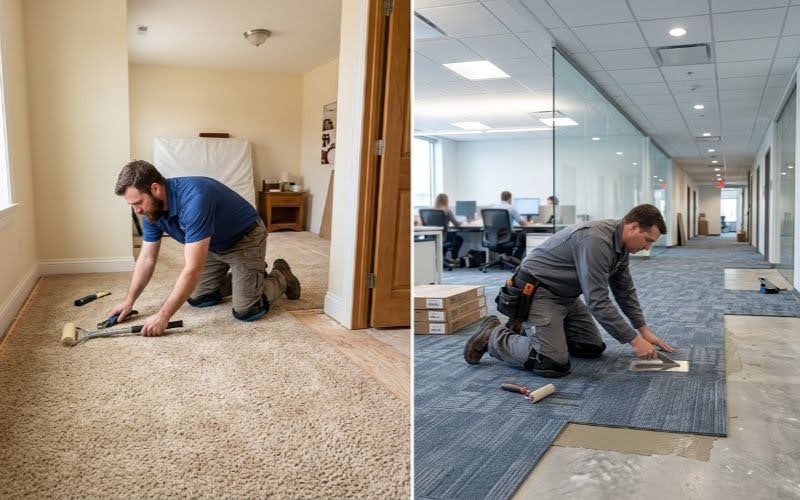
Carpet installation plays a crucial role in defining the comfort, appearance, and durability of any space. While the basic idea of laying carpet may seem similar across all environments, there are significant differences between residential and commercial carpet installation. These differences go beyond just the materials used and extend into design preferences, durability requirements, installation techniques, and long-term maintenance. Understanding these distinctions helps homeowners and business owners make informed decisions that align with their needs, budgets, and expectations.
Understanding Residential Carpet Installation
Residential carpet installation in Dubai focuses primarily on comfort, aesthetics, and creating a warm, inviting atmosphere within a home. Homeowners usually prioritize softness underfoot, visual appeal, and how well the carpet complements their interior décor. Materials like plush, Saxony, and frieze carpets are commonly chosen because they offer a luxurious feel and a cozy environment for everyday living.
The installation process in residential settings is generally less complex compared to commercial spaces. Rooms are smaller, layouts are more predictable, and foot traffic is relatively low. Installers often use padding underneath the carpet to enhance comfort and extend its lifespan. This padding also helps with insulation and noise reduction, making it ideal for bedrooms, living rooms, and family areas.
Another important aspect of residential carpet installation is customization. Homeowners often have the freedom to choose colors, patterns, and textures that match their personal style. The goal is to create a space that feels unique and comfortable rather than purely functional. As a result, the focus leans more toward design flexibility rather than heavy-duty performance.
Understanding Commercial Carpet Installation
Commercial carpet installation, on the other hand, is driven by functionality, durability, and efficiency. Businesses such as offices, hotels, retail stores, and conference centers require flooring solutions that can withstand high foot traffic and constant use. In these environments, carpets are not just decorative elements but essential components that must perform well under pressure.
Commercial carpets are typically made from durable materials like nylon or olefin, designed to resist wear, stains, and fading. Instead of thick and soft textures, low-pile or loop-pile carpets are commonly used because they are easier to maintain and less prone to damage. Carpet tiles are also popular in commercial spaces, as they allow for easy replacement of damaged sections without removing the entire carpet.
The installation process in commercial settings is more complex and often requires careful planning. Large open areas, irregular layouts, and strict timelines demand professional expertise. Installers must ensure minimal disruption to business operations, which sometimes means working overnight or during off-hours. Adhesive methods are commonly used instead of padding to keep the carpet firmly in place and reduce movement.
Key Differences in Material Selection
One of the most noticeable differences between residential and commercial carpet installation lies in the materials used. Residential carpets prioritize comfort and style, often featuring softer fibers and thicker piles. These materials create a pleasant living environment but may not hold up well under heavy traffic.
In contrast, commercial carpets are designed for durability and longevity. They are made with tougher fibers that can handle constant use without showing signs of wear. The emphasis is on performance rather than comfort, which is why commercial carpets often feel firmer underfoot. This difference in material selection directly impacts the lifespan and maintenance requirements of the carpet.
Differences in Installation Techniques
Installation techniques also vary significantly between residential and commercial projects. In homes, carpets are typically installed using a stretched-in method with padding underneath. This approach enhances comfort and allows for easier replacement in the future.
Commercial installations often use glue-down methods, where the carpet is directly adhered to the floor. This technique provides greater stability and is better suited for high-traffic areas. Additionally, the use of carpet tiles in commercial spaces offers flexibility, as individual tiles can be replaced without affecting the entire floor.
The scale of installation is another key factor. Residential projects are usually smaller and can be completed quickly, while commercial installations may involve large areas that require detailed planning, coordination, and specialized equipment.
Maintenance and Longevity
Maintenance requirements differ greatly between residential and commercial carpets. In homes, regular vacuuming and occasional deep cleaning are usually sufficient to keep carpets in good condition. Since foot traffic is limited, wear and tear occur at a slower pace.
Commercial carpets, however, require more frequent and intensive maintenance. High foot traffic increases the risk of dirt accumulation, stains, and damage. Businesses often implement scheduled cleaning programs to maintain a professional appearance and extend the carpet’s lifespan. The choice of durable materials in commercial carpets helps reduce maintenance challenges, but it does not eliminate the need for consistent care.
Cost Considerations
Cost is another area where differences become apparent. Residential carpet installation is generally more affordable due to smaller spaces and less demanding requirements. Homeowners can choose from a wide range of options that fit different budgets, balancing cost with comfort and design.
Commercial carpet installation tends to be more expensive upfront due to the need for high-quality materials, specialized installation techniques, and larger coverage areas. However, this higher initial investment often pays off in the long run through increased durability and reduced replacement frequency. Businesses must consider not only the installation cost but also the long-term value and maintenance expenses.
Choosing the Right Option
Selecting between residential and commercial carpet installation depends entirely on the intended use of the space. For homes, the focus should be on comfort, style, and creating a welcoming environment. For businesses, durability, functionality, and ease of maintenance should take priority.
It is important to work with experienced professionals who understand the specific requirements of each type of installation. Proper planning and material selection can make a significant difference in the overall performance and lifespan of the carpet.
Read Also: UAE Salary Certificate Format: Copy & Use Template
Conclusion
Residential and commercial carpet installations may seem similar at first glance, but they serve very different purposes. Residential carpets emphasize comfort and aesthetic appeal, while commercial carpets are built for durability and efficiency. From material selection and installation methods to maintenance and cost, each aspect is tailored to meet the unique demands of the environment. By understanding these key differences, property owners can make informed decisions that ensure both functionality and long-term satisfaction.


