Are you willing to obtain your Tax Residency Certificate in the UAE? Having a TRC is not a mere document, but it is your gateway to enjoying significant tax benefits, preventing being taxed twice, and making international business easier. This is a formal certificate that individuals and companies should have to prove their tax residency in the country, and to be assured that they will have all the benefits of residing in the UAE.
In this guide, I’ll take you through the steps of eligibility, documentation requirements, a step-wise application, and benefits, so that you can apply without compromising on time.
What is a Tax Residency Certificate (TRC) in the UAE?
Tax Residency Certificate (TRC) is a government document of the Federal Tax Authority (FTA) of the UAE that shows that an individual or a company is a tax resident in the country. The certificate is mostly applicable in establishing your tax residency status to any tax jurisdiction abroad, more so in the context of a double taxation agreement (DTA).
- For individuals, it assists in zeroing or cutting taxes in countries where there exist DTAs with the UAE.
- For companies, it makes international business easier and enables compliance as well as legal evidence of tax residency by making partners, banks, or investors in other countries.
Who Can Apply for a TRC in the UAE?
Eligibility Criteria for Individuals
To submit a TRC in the UAE, one should have the following requirements:
- Should be a citizen of the UAE who has a valid Emirates ID and visa.
- Must have been able to spend at least 183 days in the UAE last year.
- Is not supposed to have large tax residency requirements in a foreign country.
Eligibility Criteria for Companies
Companies that are eligible for TRC are:
- Companies registered and licensed in the UAE.
- Must have a permanent establishment in the UAE.
- Should be in accordance with the UAE tax laws and have legitimate trade licenses.
How to Get a Tax Residency Certificate in the UAE – Step by Step
The acquisition of your Tax Residency Certificate (TRC) in the UAE has never been as easy as it is today through the Federal Tax Authority (FTA) online portal. To emerge as a successful applicant, follow the following steps to experience a smooth application process:
Step 1: Visit the Federal Tax Authority Website
Go to the official Federal Tax Authority (FTA) website. This is the official site where one submits their TRC application.
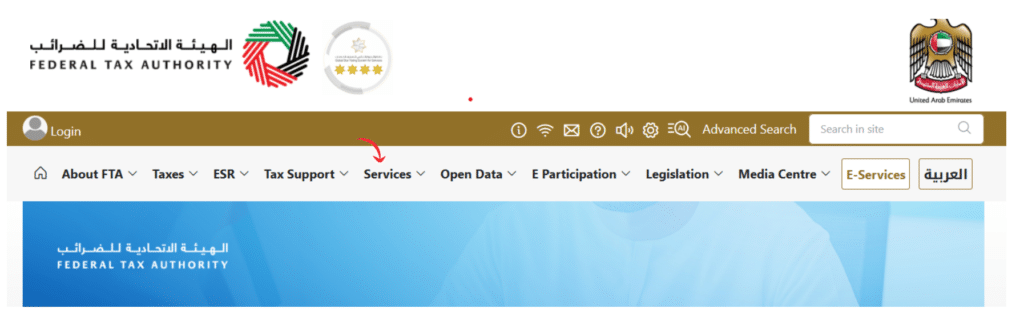
Step 2: Navigate to Services
When on the site, find the menu of Services. This segment comprises all the online services that are offered by the FTA.
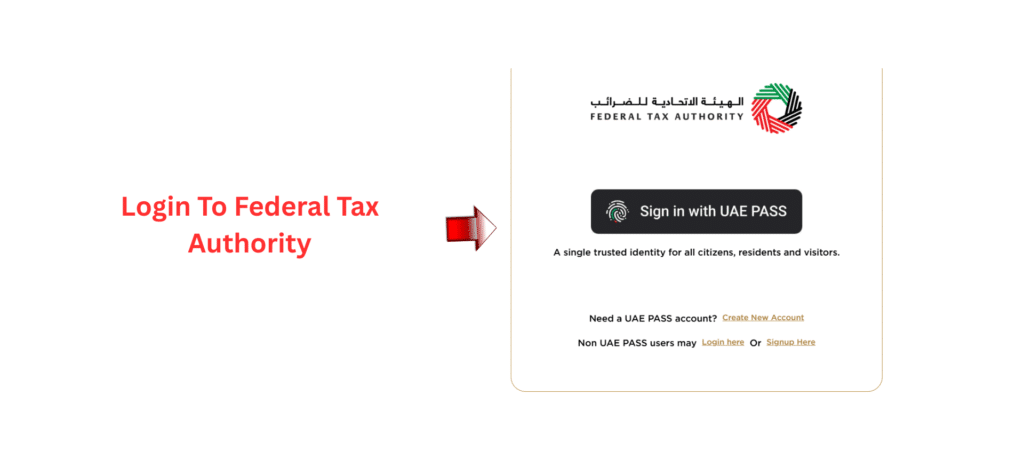
Step 3: Search for “Tax Residency Certificate”
Enter into the search bar or service list ” Tax Residency Certificate “. Choose the applicable service to continue with your application.
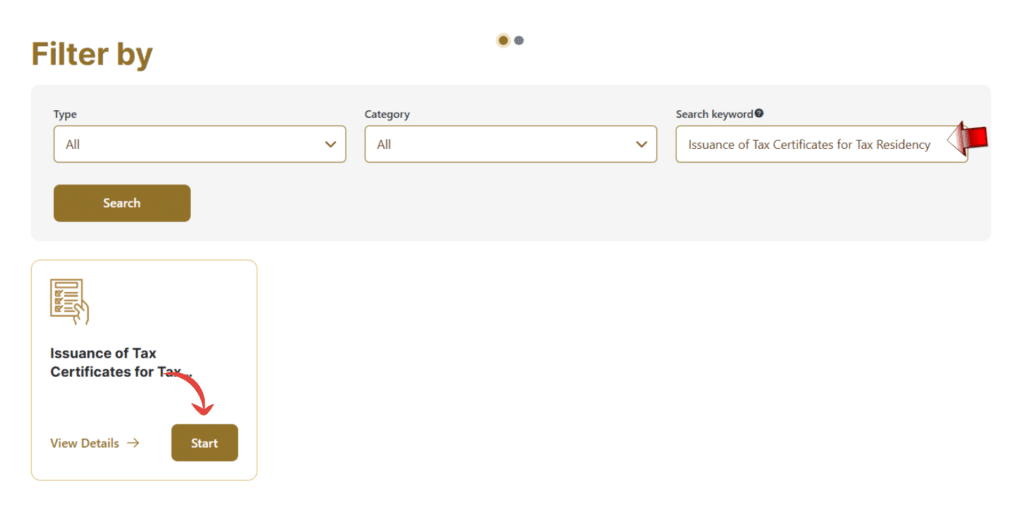
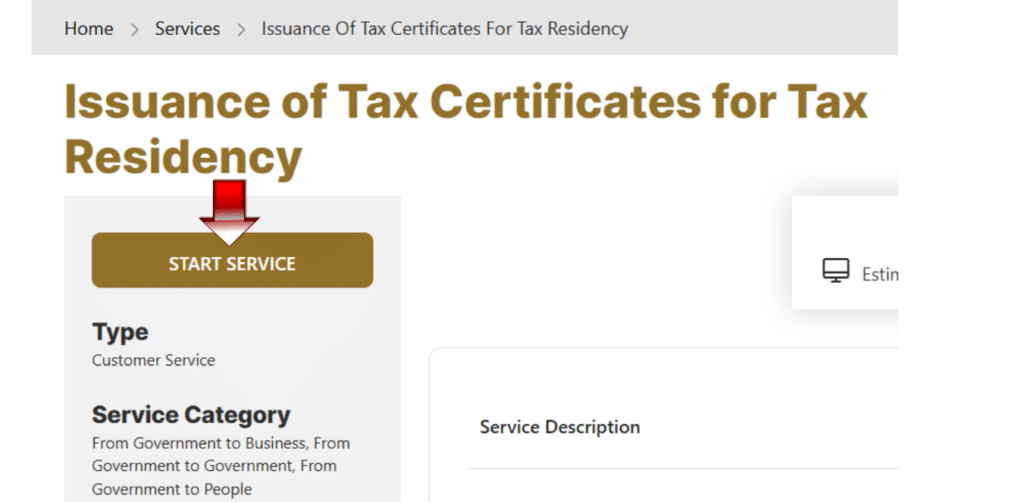
Step 4: Start the Service
Click on Start Service to start your application. You are going to be redirected to TRC application form online.
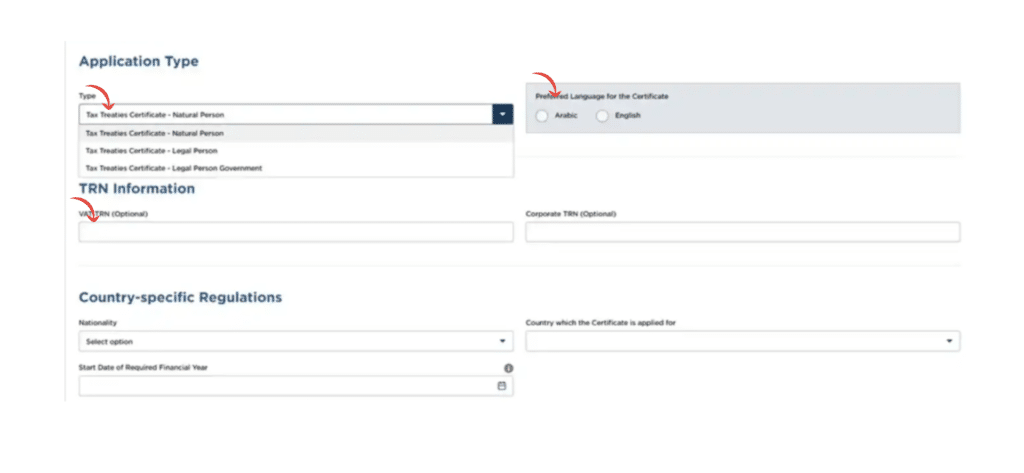
Step 5: Fill in Required Details
Please be sure to enter all personal or company information. Ensure that your information is similar to your official documents to eliminate wastage of time.
Step 6: Upload Required Documents
Post all the required documents, such as:
- Passport copy
- Emirates ID
- Proof of UAE residence
- Trade license or company documents (for businesses)
- Bank statements (if required)
Step 7: Review and Submit
Be careful and look at all the information and documents before submissions. Make sure that there is nothing missing and that nothing is wrong.
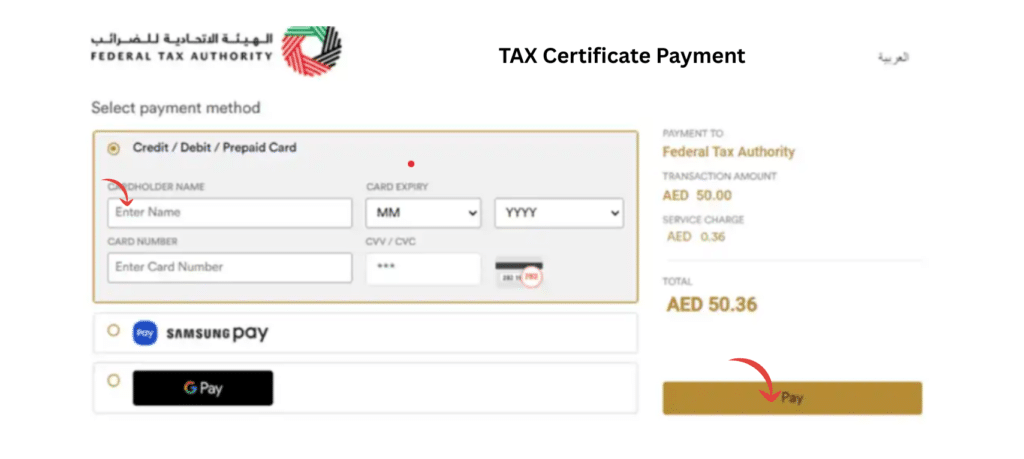
Step 8: Pay Applicable Fees
Finish the payment by using the FTA online payment gateway, which is secure. The charges can differ to individual or company applicants.
Step 9: Receive Your Tax Residency Certificate
Upon successful application, the FTA will handle your application. The TRC is generally made within 7-10 days of business. It is available to be downloaded on your FTA account.
UAE Tax Residency Law
The UAE Tax Residency Law is a document that stipulates the criteria and specifications of individuals and companies to be considered as tax residents of the UAE. In accordance with the law, the person will be eligible to get tax residency when he/she spends at least 183 days in the UAE during 12 months or have permanent residence in the country. In the case of companies, the legal requirement stipulates that the company must be registered and licensed in the UAE and have a definite presence there in terms of offices, workforce, or economic operations.
The rationale of law is to give clarity of taxation, prevent taxation in another country, and ease international tax treaty compliance. Residents and businesses may obtain a Tax Residency Certificate (TRC) by complying with the terms defined in the law.
Common Issues & How to Avoid Them When Applying for a TRC
It is not very difficult to apply for a Tax Residency Certificate (TRC) in the UAE, provided that you follow the correct steps, yet most of the people are faced with typical obstacles. The following are ways to prevent them and make the process go smoothly:
1. Missing Documents
The reason most often associated with delays is incomplete submissions. Be certain to carry all the necessary documents, such as:
- Passport copy
- Emirates ID
- Proof of UAE residence
- Trade license or company documents (for businesses)
Double-check everything before submission to avoid unnecessary rejections.
2. Incorrect Information
The process can be slowed down by even slight mistakes. Make sure that all of your personal or company information is fully correct in accordance with the records of the United Arab Emirates.
3. Processing Delays
Applications that lack the required information, have incompatible information, or have expired forms may take up time. The quickest method to have your TRC is by submitting a complete and verified application.
FAQs About TRC UAE
What is the time to acquire TRC in the UAE?
It normally takes between 7 and 10 business days if such documents are complete and accurate. In order to avoid delays, it can also be convenient to ensure that you submit it correctly.
Can it be a UAE resident who spent several months in other countries?
Yes. A resident can still claim to be a recipient of a TRC so long as he or she meets the 183-day residency requirement of the previous year.
Does the UAE business require TRC?
It is not obligatory, but it is strongly suggested to companies that operate in the international business or those interested in taking advantage of the UAE tax treaties.
Can TRC be renewed?
Yes, the TRC can be renewed annually in the portal of the Federal Tax Authority (FTA), which will provide an opportunity to remain subject to tax benefits and treaty advantages.
Read Also: Ajman to Abu Dhabi Bus Timings, Fare & Stops 2026
Final words
Obtaining a Tax Residency Certificate in the UAE is fundamental for people and companies that wish to be subject to the benefits of the tax treaty in the UAE and avoid the problem of paying taxes twice. It has now become easy and convenient to use the Federal Tax Authority online portal.
Don’t wait! Get your papers, submit your application at the FTA, get your TRC, and enjoy all the benefits of having UAE tax residency.


