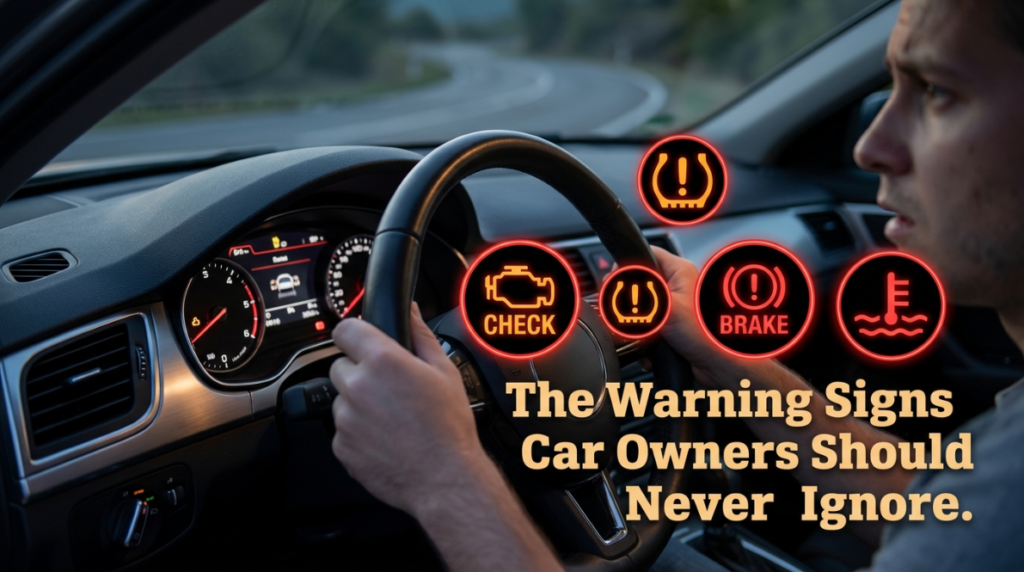
A small change in the way your car sounds, feels, or drives can be an early sign of a bigger problem. In Abu Dhabi, high heat, dusty roads, and heavy traffic can place extra stress on important vehicle parts.
Car owners should never ignore red dashboard lights, overheating, brake noises, weak AC, strange smells, or steering vibrations.
Acting early can help prevent a breakdown, protect the engine and other major parts, and keep you safer on busy roads. Regular checks and timely repairs are often far less costly than waiting for a serious failure.
Warning Signs That Need Quick Attention
Modern cars give drivers many clues before a major fault occurs. Some signs appear on the dashboard, while others can be noticed through sounds, smells, or changes in driving. Learning these signs can help you decide when to stop driving and when to visit a workshop.
Modern cars give drivers many clues before a major fault occurs. Some signs appear on the dashboard, while others can be noticed through sounds, smells, or changes in driving.
Luxury cars like Audi use advanced engines, electronics, and safety systems, so small warning signs should not be overlooked.
If an issue appears, getting it checked at a trusted Audi service in Abu Dhabi, such as Exotic Auto Services, can help find the cause before it leads to a costly repair. Early action is especially important during Abu Dhabi’s hot summer months.
1. Engine Temperature Keeps Rising
A rising temperature gauge should never be treated as a minor issue. It may point to low coolant, a leaking hose, a weak water pump, a faulty thermostat, or another cooling problem.
Continued driving while the engine is overheating can cause serious internal damage. If the temperature moves into the danger zone or a red coolant warning appears, find a safe place to stop and switch off the engine.
Allow the vehicle to cool before checking anything. Do not open a hot coolant tank because the system may be under pressure.
2. The Oil Pressure Warning Light Comes On
The oil pressure warning light is one of the most serious dashboard alerts. It often appears as a red oil can symbol and can mean that the engine is not receiving enough oil pressure. Low pressure can quickly damage moving engine parts.
If this warning stays on while the engine is running, pull over safely and switch the engine off. Do not assume that simply adding oil will solve the problem. A technician should check the oil level, leaks, pressure, filter, pump, and related parts before the vehicle is driven again.
3. Brake Noise or a Soft Pedal Should Not Be Ignored
Brakes are among the most important safety systems in any car. A high-pitched squeal may mean the brake pads are wearing down, while grinding can suggest that metal parts are rubbing against each other.
A soft or spongy brake pedal can also point to a serious hydraulic problem. Abu Dhabi’s busy roads can require frequent braking, which adds to wear.
If braking feels different, the car takes longer to stop, or a warning light appears, have the system checked as soon as possible instead of waiting for the problem to worsen.
4. The Battery or Charging Light Stays On
A battery warning light does not always mean the battery itself is the only problem. It can point to a failing alternator, damaged cable, weak connection, or another charging fault.
Slow engine cranking is another common warning sign. Abu Dhabi’s high temperatures can also put extra stress on vehicle batteries and shorten their useful life.
If the charging light remains on while driving, avoid unnecessary electrical use and arrange an inspection. A charging fault can leave the vehicle unable to start after the battery loses its remaining power.
5. The AC Starts Blowing Warm or Weak Air
A weak AC system is easy to notice in Abu Dhabi, but it should not be treated as only a comfort problem. Poor cooling may be linked to low refrigerant, a leak, a faulty compressor, a blocked condenser, or an electrical issue.
If the AC becomes less effective over time, an early inspection can identify the cause. Strange sounds or unusual smells from the vents should also be checked. Fixing the problem early may prevent further damage and help keep the cabin comfortable during very hot weather.
6. The Steering Wheel Vibrates or the Car Pulls
A shaking steering wheel can be a sign of tire imbalance, uneven tire wear, wheel damage, or a suspension problem. If the vehicle pulls to one side, incorrect wheel alignment may also be involved.
These issues can become more noticeable at higher speeds. Drivers should not ignore strong vibrations, especially when they appear during braking or highway driving.
A workshop can inspect the tires, wheels, steering, suspension, and alignment to find the source. Early attention can improve handling, reduce uneven tire wear, and support safer driving.
7. Strange Smells Can Reveal Hidden Problems
Your sense of smell can provide an early warning about vehicle problems. A sweet smell may suggest a coolant leak, while a burning oil smell can point to an oil leak or overheated engine part.
A strong burning smell from the brakes may occur after heavy braking, but repeated smells should be inspected. Electrical burning smells are also a reason to stop and seek professional help.
Never ignore a new or strong odor. Finding the source early can help prevent damage and, in some cases, reduce the risk of fire.
8. The Transmission Hesitates, Slips, or Jerks
Changes in gear shifting can be an early sign of a transmission problem. Drivers may notice a delay when changing gears, sudden jerking, slipping, unusual sounds, or difficulty selecting a gear.
Low or damaged transmission fluid can be one possible cause, but electronic or mechanical faults can also create similar symptoms. Hot conditions can place extra stress on transmission systems.
If shifting behavior changes, get the vehicle checked rather than continuing to drive until it stops moving. Early diagnosis may help prevent a more expensive transmission repair.
9. Slow Starting Should Be Checked Early
If your car takes longer than usual to start, do not wait until it fails. Slow cranking can be linked to a weak battery, poor electrical connection, starter problems, or charging issues. Heat can also affect battery performance over time.
Drivers who notice repeated slow starts should arrange a battery and charging system test. A simple check can show the battery’s condition and help identify whether another part is causing the issue. Replacing a weak battery at the right time is much easier than dealing with a car that will not start.
Dashboard Warning Colors Help Show Urgency
Dashboard lights use different colors to help drivers understand how quickly they should respond. Red warnings generally require immediate attention, while yellow or orange lights usually mean that the vehicle should be checked soon.
Green and blue lights are normally used to show that a feature or system is active. The exact meaning can vary by model, so drivers should check the vehicle handbook for the correct symbol.
| Light Color | General Meaning | What to Do |
| Red | Serious warning | Stop safely and seek help |
| Yellow/Orange | Fault or service needed | Arrange a diagnostic check soon |
| Green/Blue | System or feature active | Usually no repair is needed |
Do Not Ignore Tire Problems in Hot Weather
Tires deserve special attention in Abu Dhabi because they are directly exposed to high road temperatures and heavy use. Cracks, worn tread, bulges, uneven wear, and low pressure can increase the risk of tire failure.
Drivers should check tire pressure regularly and inspect the condition of all four tires, including the spare where fitted. Tire age also matters because rubber changes over time. Before a long highway trip, a quick tire check can help identify a problem before it becomes dangerous.
What to Do When a Warning Appears?
The correct response depends on the warning. A red oil, coolant, or brake warning should be treated as urgent, while a yellow service light may allow a careful drive to a workshop.
If the vehicle is overheating, losing power, producing smoke, or behaving dangerously, do not continue driving just to reach a garage. Stop in a safe place and arrange professional assistance.
Taking a photo of the dashboard warning can also help a technician understand what happened and speed up the first inspection.
Regular Checks Can Prevent Bigger Problems
Many serious vehicle failures give small warnings first. A strange sound, slow start, weak AC, changing brake feel, or unusual vibration may appear days or weeks before a major fault. Regular maintenance gives technicians a chance to find these problems early.
Owners should follow the recommended service schedule and consider extra checks before periods of heavy driving. In Abu Dhabi’s demanding climate, preventive care is especially useful.
It can help protect important systems, reduce unexpected repair costs, and keep the vehicle ready for daily driving.
Conclusion
Warning signs should never be ignored, especially when driving in Abu Dhabi’s hot and demanding conditions. Red dashboard lights, overheating, brake problems, charging faults, unusual smells, weak AC, vibrations, and transmission issues all deserve proper attention.
Knowing what these signs mean helps drivers make safer choices and avoid larger repair bills. Regular inspections and timely maintenance can keep important vehicle systems working properly.
For owners who want dependable Audi service in Abu Dhabi, choosing a workshop with proper diagnostic tools and trained technicians can make early fault detection much easier.


