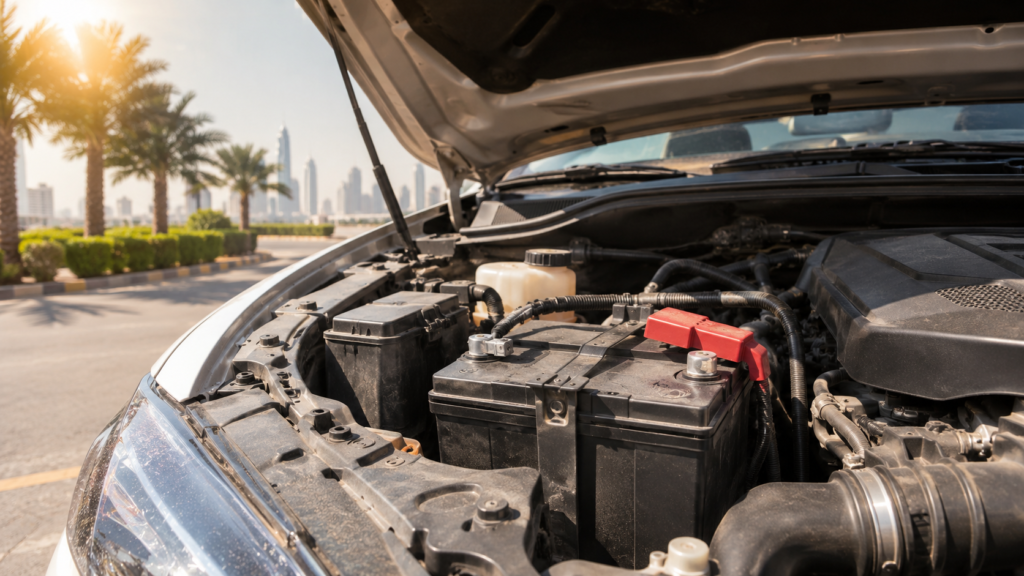
Most car batteries in the UAE need replacement every 2 to 3 years, although some may last longer depending on their quality, driving habits, and maintenance. The country’s high summer temperatures can speed up battery wear, cause fluid loss and increase the risk of corrosion.
Frequent short trips, long parking hours, poor charging, and loose battery connections can shorten its life further. Regular battery testing and simple maintenance can help drivers avoid sudden breakdowns and know when it is time for a replacement.
How Long Does a Car Battery Last in the UAE?
A typical car battery can last around 2 to 3 years in the UAE, but its actual lifespan depends on several factors. Extreme heat is one of the biggest reasons batteries wear out faster in this region. High temperatures affect the chemical reactions inside the battery and can damage its internal parts over time.
Some premium batteries may last longer when used under suitable conditions. However, no battery has a fixed lifespan. Driving habits, vehicle type, electrical load and charging system condition all affect how long it remains reliable. Drivers should check battery health regularly instead of waiting for it to stop working.
1. Battery Quality and Brand
Battery quality plays an important role in its working life. Different brands use different materials, designs and technologies, which can affect their performance and ability to handle heat. Some batteries are designed for vehicles with higher electrical demands, while others are made for standard daily use.
However, an expensive battery does not always last longer than a cheaper one. The correct battery specifications, proper installation and regular checks are equally important. Drivers should choose a battery that matches their car manufacturer’s requirements rather than selecting one based only on its price or brand name.
2. Driving Habits
How often and how far you drive can affect battery life. Cars used regularly for longer trips usually give the alternator enough time to recharge the battery after engine start-up. On the other hand, frequent short trips may not provide enough charging time.
Leaving a car unused for several weeks can also cause battery drain. Even when the engine is off, some systems continue using small amounts of electricity. A battery that remains undercharged for long periods may lose its ability to hold power. Regular driving and battery checks can help reduce these problems.
3. Weather Conditions
The UAE’s hot climate puts extra pressure on car batteries. During summer, temperatures under the bonnet can become much higher than the outside air. This heat can speed up chemical reactions, increase water loss in some battery types, and damage internal components.
Even when the weather becomes cooler, the damage caused during summer does not disappear. A battery that has already suffered internal wear may continue losing performance. Parking in shaded or covered areas and checking battery health before and after summer can help drivers identify problems early.
What Causes Car Battery Corrosion?
Battery corrosion is a common issue that can affect the electrical connection between the battery and the car. It often appears as a white, blue, or green powder around the positive or negative terminals. If left untreated, it can create resistance and reduce the flow of electricity.
1. Battery Acid Vapours
Lead-acid batteries contain an electrolyte solution that helps produce electrical power. During normal operation, small amounts of gas and vapour may escape through the battery’s vents. These can react with metal around the terminals and lead to corrosion.
2. Overcharging
A faulty alternator or voltage regulator can supply more power than the battery needs. This condition is known as overcharging. It can increase heat inside the battery and cause excess gas to escape, which may lead to corrosion around the terminals.
3. Loose Battery Connections
Battery terminals need a firm connection to allow electricity to flow properly. If the clamps are loose, electrical resistance can increase and cause heat around the connection. This may lead to poor starting performance and, in some cases, corrosion.
4. Normal Battery Age
As a battery gets older, its internal parts gradually wear out. This natural ageing process can affect its ability to store and deliver electrical power. Older batteries may also become more likely to develop corrosion around their terminals.
Warning Signs That Your Car Battery Needs Replacement
A failing battery often shows signs before it stops working completely. Recognising these symptoms can help you arrange a replacement at the right time and avoid being stranded in a parking area or on the road.
1. Slow Engine Starting
If your engine takes longer than usual to start, the battery may not be supplying enough power. You may hear the engine turning slowly before it finally starts. This can happen when the battery is weak, old, or undercharged.
2. Clicking Sounds
A clicking sound when turning the key or pressing the start button may indicate that the battery does not have enough power to operate the starter motor. However, a faulty starter or loose battery connection can cause similar symptoms.
3. Dim Headlights
Headlights that appear weaker than normal may indicate low battery power or an electrical charging problem. If other electrical features are also working slowly, have the battery and alternator checked.
4. Dashboard Battery Warning Light
A battery-shaped warning light may appear when there is a problem with the charging system. It does not always mean the battery itself is faulty. The alternator, voltage regulator or electrical connections may need inspection.
5. Swollen Battery Case
A swollen or damaged battery case can be a sign of excessive heat or overcharging. This condition should not be ignored because a damaged battery may leak or become unsafe. Arrange a professional inspection and avoid handling it unnecessarily.
How to Maintain Your Car Battery and Make It Last Longer
Good battery maintenance can help reduce early wear and improve starting performance. Although drivers cannot control the UAE’s summer temperatures, they can follow a few simple habits to protect the battery.
Park Your Car Away From Direct Sunlight
Parking in a covered or shaded area can help reduce the heat that builds up inside the engine compartment. Whenever possible, choose underground parking, covered spaces or shaded areas. This is especially useful when the car will remain parked for several hours.
Keep Battery Terminals Clean
Check the battery terminals for white or green powder, dirt and loose connections. Corrosion can affect the flow of electricity and cause starting problems. Have the terminals cleaned using the correct method and ensure the clamps are properly secured. Avoid touching damaged battery parts or cleaning them without suitable safety precautions.
Check Battery Health Regularly
A battery health test can show whether the battery is holding enough charge and delivering the required starting power. Drivers should consider testing their batteries every few months, particularly during summer or when the battery is getting older.
Drive Your Car Regularly
Regular driving gives the alternator time to recharge the battery. If your car is used only for short trips, the battery may not receive enough power to recover after starting the engine. Longer drives can help, but they will not fix a damaged battery or faulty charging system.
When Is the Right Time to Replace Your Car Battery?
The right time to replace a car battery depends on its age, test results, and overall condition. If it struggles to start the engine, repeatedly loses charge, or fails a battery health test, replacement may be necessary.
Do not wait until the battery stops working completely. A sudden failure can leave you stranded at home, in an office parking area or at a shopping centre. Choosing a battery with the correct size, capacity, and specifications is important for reliable performance.
If your car cannot start because of a weak or dead battery, mobile car battery replacement can be a convenient option. An on-site technician can visit your location, test the existing battery, and install a suitable replacement when required. This saves you from arranging a garage visit when the car cannot be driven.
Before fitting a new battery, make sure the charging system is working correctly. A faulty alternator can damage a new battery or cause it to lose charge again.
Conclusion
Most car batteries in the UAE last around 2 to 3 years, but extreme heat, driving habits, corrosion, and charging problems can shorten their lifespan. Regular battery tests, clean terminals, shaded parking, and proper electrical use can help maintain battery performance.
Pay attention to warning signs such as slow starting, clicking sounds, dim headlights, and repeated jump-starts. Replacing a weak battery at the right time can help prevent unexpected breakdowns and keep your car ready for everyday driving.


