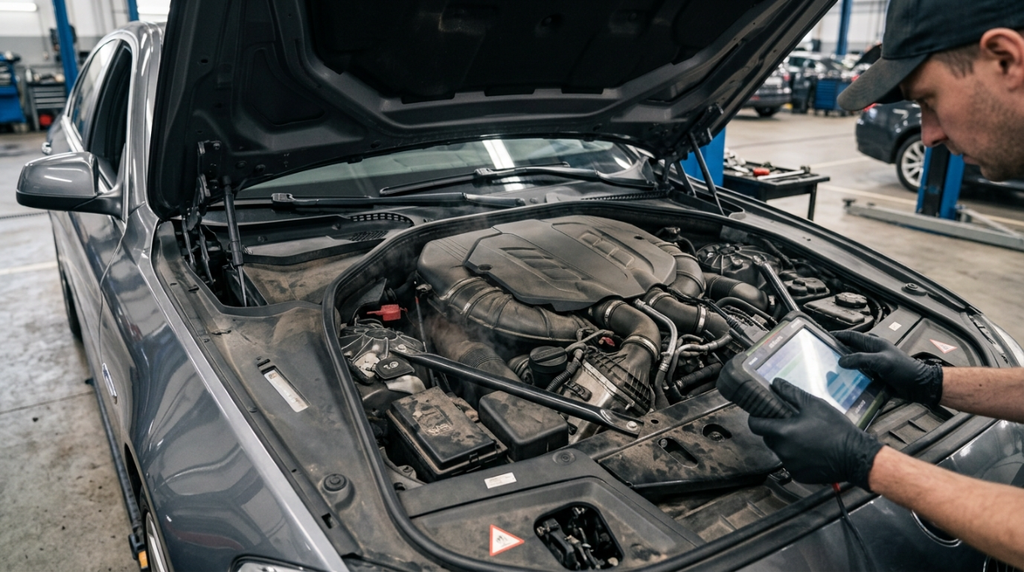
A luxury car may feel perfectly normal when you first start it, then begin acting differently after driving for a while. This can be confusing, especially when the problem appears only after the engine becomes warm. In many cases, heat changes how fluids, sensors, electrical parts, and engine components work.
Several issues can cause these temperature-related changes, including faulty temperature sensors, weak ignition parts, fuel system problems, changing oil pressure, cooling system faults, air leaks, and transmission behavior.
Heat can also affect wiring, electronic parts, and rubber components. Some problems become visible only when parts expand or operating conditions change. Understanding these causes can make it easier to find the real source of the problem.
Why Does a Luxury Car Behave Differently When It Gets Warm?
Modern luxury cars use many systems that change their operation as the engine reaches normal temperature. The engine control unit receives information from sensors and adjusts fuel, ignition, cooling, and other functions based on that data.
When a part starts failing under heat, the car may respond differently than it does during a cold start. The following problems are common reasons for temperature-related changes. Each one can create symptoms that appear only after the vehicle has been running for some time.
1. A Faulty Temperature Sensor Can Send Wrong Data
The engine uses temperature sensors to know how warm the coolant and other parts are. This information helps the control unit decide how much fuel the engine needs and when to change other settings. A faulty sensor may provide correct readings when the engine is cold but send incorrect data after heating up.
This can lead to rough idling, hard starting, poor fuel economy, or unusual engine response. The cooling fan may also run at the wrong time. A diagnostic scan combined with live data testing can help confirm whether the temperature reading matches the actual engine condition.
2. Ignition Parts Can Become Weak Under Heat
Spark plugs, ignition coils, and related parts work under high temperatures. A component that is already weak may work normally when cold but begin to fail after reaching operating temperature. This can cause a noticeable change in how smoothly the engine runs.
A driver may feel shaking, hesitation, misfires, or a loss of power after driving for several minutes. The problem may disappear again after the vehicle cools down. This type of fault can be difficult to find without proper testing because the component may appear normal during a cold inspection.
3. Fuel Delivery Problems May Appear After Warming Up
The engine needs a steady supply of fuel to maintain smooth performance. A weak fuel pump, restricted filter, faulty injector, or pressure problem may become more noticeable when the vehicle is warm and under load.
For example, a fuel pump that is beginning to fail may lose pressure after running for a long period. The car could then hesitate, lose power, or take longer to restart after being switched off.
Checking fuel pressure during both cold and warm conditions can provide useful information. This helps separate a fuel problem from an ignition or sensor fault.
4. Oil Becomes Thinner as the Engine Heats Up
Engine oil becomes less thick as its temperature rises. This is normal, but an engine with worn parts, incorrect oil, low oil level, or another lubrication problem may show symptoms when the oil becomes hot.
A driver may notice ticking sounds, changes in engine noise, or an oil pressure warning after the car warms up. Hot oil can also make an existing internal wear problem more noticeable.
The correct oil grade and level should always be checked according to the vehicle maker’s specifications. If an oil warning appears, the issue should be inspected promptly rather than ignored.
5. Cooling System Problems Can Change Vehicle Behavior
The cooling system keeps the engine within its normal temperature range. It includes parts such as the radiator, coolant, thermostat, water pump, cooling fans, and hoses. A fault in one of these parts may not be obvious during a cold start.
As the engine gets hotter, a weak water pump, stuck thermostat, blocked radiator, or low coolant level can reduce cooling performance.
The temperature gauge may rise, the cooling fan may run often, or the air conditioning may behave differently. A coolant leak may also become easier to notice when the system becomes pressurized.
6. Air Leaks Can Become More Noticeable With Heat
The engine needs the right balance of air and fuel to run correctly. Air entering the engine through an unwanted opening can upset this balance. Hoses, seals, intake parts, and other components can change slightly as they heat up.
A small leak may therefore be difficult to notice during a cold inspection but become more obvious once the engine reaches normal temperature.
Symptoms can include rough idle, hesitation, poor acceleration, or an engine warning light. Smoke testing can help technicians find small air leaks that are not easy to see during a normal visual inspection.
7. Transmission Problems May Appear After Warm-Up
Automatic transmissions also change their behavior as their fluid reaches operating temperature. The transmission control system uses temperature and pressure information to manage gear changes.
A problem with fluid condition, pressure, solenoids, or sensors may become more noticeable when the vehicle is warm.
Drivers may feel delayed gear changes, harsh shifting, slipping, or hesitation after longer drives. The car may shift normally when cold and behave differently once the transmission reaches its normal temperature.
Checking transmission fluid condition, fault codes, temperatures, and pressure can help identify the source instead of assuming the transmission needs major repair.
8. Electrical Problems Can Get Worse With Heat
Heat can affect electrical connections, wiring, control modules, and electronic components. A damaged wire or weak connection may work correctly when cold but lose proper contact after the surrounding parts become hot.
This can create strange symptoms that appear and disappear during the same drive. Warning lights may turn on, certain functions may stop working, or the engine may develop a fault only after warming up.
Technicians may need to test voltage, ground connections, wiring, and live data while the vehicle is warm. This is important because a cold inspection may not reproduce the problem.
9. Rubber Seals and Hoses Can Change With Temperature
Many vehicle systems use rubber hoses, seals, and gaskets. These materials expand and become more flexible as they heat up. If a seal or hose is already damaged, the temperature change may make the problem easier to notice.
A small vacuum leak, coolant leak, or oil leak can therefore appear after the engine reaches operating temperature. In some cases, the leak may also leave a smell or visible residue.
A technician can inspect the affected area while the vehicle is warm and check for signs of pressure loss, fluid leakage, or damaged sealing surfaces.
How Can You Tell if the Problem Is Temperature Related?
A useful clue is when the symptom appears. If the car works normally during the first few minutes and changes after reaching normal temperature, the timing itself can help narrow the possible causes.
Drivers should note:
- When the problem starts: Record how long the car runs before the symptom appears.
- What changes: Note whether the issue affects power, idle, gear changes, or starting.
- Warning lights: Check whether a warning appears only after the engine becomes warm.
- Driving conditions: Notice if the problem occurs during traffic, highway driving, or heavy acceleration.
- Restart behavior: Check whether the car starts differently after a warm drive.
These details can help a technician reproduce the problem and avoid unnecessary part replacement.
When Should You Get a Temperature-Related Problem Checked?
A small change in vehicle behavior should not always be treated as an emergency, but repeated symptoms should not be ignored. Problems that appear when the car becomes hot can sometimes grow worse with continued driving.
Immediate attention is especially important when you notice an overheating warning, oil pressure warning, severe engine misfire, major loss of power, burning smell, smoke, or unusual transmission behavior.
For less serious symptoms, arranging a proper inspection can still help prevent a small fault from becoming a larger repair. Professional car repair in Abu Dhabi can help diagnose temperature-related problems using the right testing equipment.
Conclusion
A luxury car can behave differently after reaching operating temperature because heat changes the way many mechanical and electronic parts work. Faulty sensors, weak ignition parts, fuel pressure problems, oil issues, cooling faults, air leaks, transmission problems, electrical faults, and damaged seals can all create symptoms that appear only after warm-up.
The timing of the problem is an important clue. Paying attention to when the symptom starts can help narrow the possible causes. Instead of replacing parts based only on a warning code or a guess, a proper warm-engine diagnosis can help find the actual fault and prevent unnecessary repairs.


