
There is no single treatment that works best for everyone seeking skin whitening. The right option depends on the cause of pigmentation, skin type, and how much downtime is realistic. Many people start their search after a consultation at a pearl skin polyclinic dubai, where a professional can assess the skin before recommending an approach.
Skin whitening treatments range from daily topical products to advanced laser and injectable procedures. This guide compares the most popular options so it becomes easier to choose the treatment that fits a particular concern.
Popular treatment choices include topical treatment with brightening serums, in-clinic peel treatment, laser treatment, and injectable treatment such as PRP. Each treatment approaches pigmentation differently, so comparing them side by side makes the decision easier.
Understanding what causes uneven skin tone in the first place helps explain why some treatments work better than others for specific types of pigmentation.
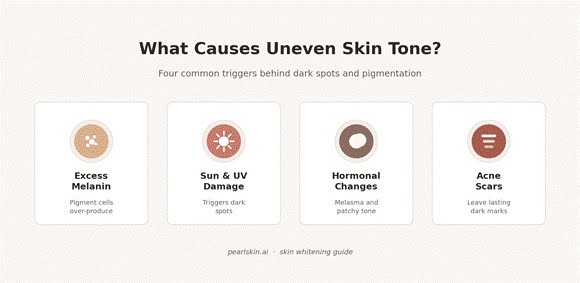
What Causes Uneven Skin Tone and Dark Spots?
Dark spots and uneven skin tone usually come from a combination of internal and external factors.
Excess Melanin Production
Melanin is the pigment that gives skin its color. When certain cells produce too much melanin in specific areas, it results in dark spots, hyperpigmentation, and an uneven complexion.
Sun Exposure and UV Damage
UV rays trigger melanin production as a defense mechanism, which is why sun exposure often deepens existing dark spots and creates new ones. Daily sunscreen is essential for preventing further discoloration.
Hormonal Changes and Melasma
Hormonal changes from pregnancy, birth control, hormone therapy, or thyroid conditions can trigger melasma, a stubborn form of pigmentation that appears as symmetrical patches, often on the cheeks and forehead.
Acne Scars and Post-Inflammatory Marks
Acne scars and blemishes often leave dark marks behind after the original breakout heals. These post-inflammatory marks can take months to fade without targeted treatment.
Identifying the underlying cause is the first step toward choosing the right treatment, since a treatment that works well for sun damage may do little for melasma or acne scars.
Topical Skin Lightening Treatments
Topical skin whitening agents, such as creams, serums, and gels, are used daily to reduce excess pigment, fade dark spots, and improve uneven skin tone. Consistent use over several weeks typically produces the most noticeable improvement.
| Ingredient | How It Works | Best For |
| Vitamin C | An antioxidant that inhibits melanin production and brightens overall skin tone | Dullness, early pigmentation, uneven skin tone |
| Niacinamide | Reduces the transfer of pigment to skin cells while calming redness and irritation | Sensitive skin, mild discoloration |
| Kojic acid | A natural compound that fades dark spots by blocking excess melanin production | Dark spots, post-acne marks |
| Glutathione | An antioxidant used topically or in professional settings to lighten and even out skin tone | Overall brightening, dull complexion |
| Retinoids | Speed up cell turnover, fading marks and improving skin texture over time | Acne scars, uneven texture |
These ingredients are often combined, such as a vitamin C serum in the morning and a retinoid at night, for a more complete skincare and sun protection routine. A topical treatment is usually the first treatment most people try before considering an in-clinic procedure.
Chemical Peels for Skin Brightening
A chemical peel for skin brightening uses acids like glycolic or salicylic acid to exfoliate the top layer of skin, revealing fresher, more even-toned skin underneath. As a treatment, a peel is popular because it is quick, affordable, and adjustable to different skin types.
Glycolic Acid Peels
Glycolic acid peels are effective at reducing pigmentation and improving radiance by removing dead surface cells, but results are not permanent and require ongoing maintenance sessions. A stronger peel treatment produces faster results but also means more downtime after each session.
Salicylic Acid Peels
Salicylic acid peels penetrate oil-rich pores, making them well suited for pigmentation linked to acne scars and blemishes rather than sun damage alone. This peel is often recommended as a maintenance treatment for oily or acne-prone skin.
Laser Treatments for Skin Whitening
Laser treatments use focused light energy to target pigment directly, often producing faster results than topical treatment alone. Because a laser treatment works beneath the surface, it can reach pigment that creams cannot.
Laser Toning
Dermatologist-guided laser toning uses focused light energy to reduce excess pigmentation and improve uneven skin tone. It is considered one of the more advanced skin whitening treatments for stubborn dark spots, and this treatment usually requires a short series of sessions for the best outcome.
Laser Resurfacing for Texture and Tone
Laser resurfacing treatment targets both tone and texture at once, making it a useful treatment for skin affected by scarring as well as pigmentation. This treatment is generally reserved for more resistant cases.
Laser Hair Removal and Related Treatments
Laser hair removal is sometimes combined with brightening treatment in areas prone to friction and discoloration, since reducing hair growth can also reduce related irritation and dark marks over time. Laser technology used for hair removal and tattoo removal follows similar principles to pigment-targeting treatment, using focused light to break down unwanted material beneath the skin. Some clinics offer combined hair removal and brightening treatment packages for larger areas such as the underarms.
Injectable and Advanced Whitening Treatments
Beyond topical and laser treatment, some clinics offer injectable treatment options such as PRP for more advanced skin whitening.
● PRP therapy — this treatment uses the patient’s own platelets to stimulate repair and a natural glow, and is often combined with other whitening treatment for layered results.
● Mesotherapy — a treatment that delivers brightening actives directly into the skin using a series of fine injections.
● Skin booster treatment — some clinics pair a hydrating skin booster treatment with whitening treatment to improve both tone and glow at the same time.
These advanced treatments are typically recommended after a consultation, since not every treatment suits every skin type.
Professional Facial Treatments
Clinical skin brightening facial treatments, like HydraFacial or oxygen therapy, work by combining hydration, mild exfoliation, and a glow boost in a single session. A facial treatment is a gentler option than a peel or laser treatment, with little to no downtime.
● HydraFacial — a gentle, multi-step facial treatment that cleanses, exfoliates, and infuses the skin with brightening serums for an instant glow.
● Microdermabrasion — physically exfoliates dull, pigmented surface cells for an immediate brighter appearance and smoother texture.
● Oxygen facial treatment — infuses the skin with oxygen and brightening serums for a quick glow before an event.
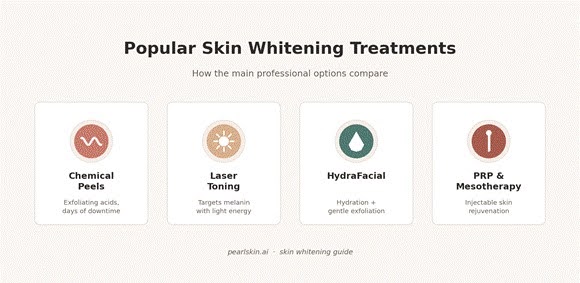
Comparing the Main Skin Whitening Treatments
Each treatment works differently, so comparing downtime and the number of sessions needed helps set realistic expectations for any treatment being considered:
| Treatment | How It Works | Downtime | Sessions Needed |
| Chemical peel | Glycolic or salicylic acid exfoliates the top layer of skin to fade dark spots and marks | Days to two weeks | 3 to 6, weeks apart |
| Laser toning | Focused light energy breaks down excess melanin beneath the surface | Minimal to none | 4 to 6, weeks apart |
| HydraFacial | Combines hydration, mild exfoliation, and a glow boost in one session | None | Monthly maintenance |
| Microdermabrasion | Physically exfoliates the outer layer to remove dull, pigmented cells | None to minimal | 4 to 8, weekly |
| PRP therapy | Uses the patient’s own platelets to stimulate repair and even out tone | One to two days | 3 to 4, weeks apart |
Kojic acid is commonly used in topical skincare for pigmentation, while glutathione is often used for overall skin brightening, and both can be paired with an in-clinic treatment for faster results. No single treatment works for every skin concern, which is why many treatment plans combine more than one approach, and these treatments each suit a different concern, so combining two treatments in one plan is common.
For aesthetic clinics in Dubai, clear treatment education and a strong local online presence help patients make informed decisions before booking. Odyssey Marketing LLC supports UAE healthcare and beauty businesses with Local SEO, content strategy, and lead-generation solutions.
So, Which Treatment Is Best?
For mild dullness or early dark spots, a topical treatment with vitamin C, niacinamide, or kojic acid is usually enough. For deeper pigmentation and acne scars, a chemical peel treatment or laser toning treatment tends to deliver more noticeable, faster results. Comparing treatments side by side, rather than choosing based on price alone, leads to a better long-term outcome.
Melasma often responds best to a combination treatment approach, since hormonal pigmentation can be resistant to a single treatment type. With the right guidance, skin brightening and pigmentation treatment can be a safe and effective way to improve overall skin appearance while maintaining healthy skin function.
How to Choose the Right Treatment for You
A few questions help narrow down the best option:
● Is the discoloration caused by sun damage, hormones, or acne scars?
● How much downtime is realistic between sessions?
● Is the skin sensitive, requiring gentler formulas and milder procedures?
● Is the goal a subtle improvement or a more dramatic change?
A consultation with a dermatologist or licensed provider helps match these answers to a customized, realistic treatment plan.
Daily Skincare and Sun Protection
Whatever treatment is chosen, a consistent daily routine protects results and helps prevent new pigmentation from forming:
1. Cleanse gently, morning and night, to remove impurities without irritating the skin.
2. Treat with a vitamin C or niacinamide serum to support an even tone.
3. Moisturize to keep the skin barrier healthy while it repairs.
4. Protect with a broad-spectrum sunscreen every day, since sun exposure undoes progress quickly.
Skipping daily sunscreen is one of the most common reasons skin whitening treatments fail to deliver lasting results.
Safety and Side Effects
Most professional skin whitening treatments are considered safe when performed by a qualified provider, though mild, temporary side effects are common:
● Redness or mild irritation after peels and laser sessions
● Increased sun sensitivity for a few days after treatment
● Occasional dryness or peeling during the healing process
Oral or IV glutathione and other unregulated whitening products carry more risk and should only be considered after consulting a qualified dermatologist.
Who Should Avoid Certain Treatments?
Not every treatment suits every patient. Pregnant or breastfeeding women are usually advised to avoid chemical peel treatment, laser treatment, and injectable treatment until afterward. Diabetic patients and anyone with very sensitive or actively inflamed skin should discuss any treatment plan with a dermatologist first, since some treatment options can trigger irritation or slower healing in these cases.
Dermatologist’s Note: Providers often note that consistent, professional-grade treatments outperform harsh over-the-counter products. Combining the right treatment with a daily vitamin C serum, sunscreen, and a gentle skincare routine gives skin the best chance to stay even-toned long term.
Frequently Asked Questions About Skin Whitening Treatments
Which treatment is best for skin whitening?
The best treatment depends on the cause of pigmentation. Topical products work well for mild dullness, while chemical peels, laser toning, or PRP therapy tend to suit deeper, more stubborn discoloration.
Are skin whitening treatments permanent?
Most results are not permanent. Melanin production can resume over time, so maintenance sessions and daily sun protection are needed to keep results looking even.
Is skin whitening safe?
Yes, when professional treatments are performed by a qualified provider using approved products. Unregulated creams and oral supplements carry more risk and are best avoided without medical guidance.
How long does it take to see results?
Topical treatments typically take four to eight weeks of consistent use, while professional treatments like laser toning or peels often show visible results within a few sessions.
Can skin whitening treatments help with acne scars?
Yes — chemical peels, laser toning, and topical retinoids can all help fade the dark marks acne scars leave behind, though deeper scars may need combination treatment.
Is PRP treatment effective for skin whitening?
PRP treatment is not a whitening treatment on its own, but it supports repair and can improve overall glow and texture when combined with a dedicated pigmentation treatment.
How much does a skin whitening treatment cost?
Cost varies by treatment type and the number of sessions needed. A topical treatment is usually the most affordable option, while laser treatment and injectable treatment cost more per session but often need fewer visits overall.
For a personalized recommendation, a licensed provider can review skin type and goals, compare available treatments, and suggest a treatment plan. Visit https://www.pearlskin.ai/ to learn more or book a consultation.


